Topic guide histamine and the gut
Known from hay fever.Hidden in cheese.
Histamine makes your nose run when the pollen is flying. But it is also in cheese, wine and fish. What it does in the body, how your gut breaks it down and what is behind histamine intolerance: here is the overview.
- 5 minute read
- Based on the current guideline
- With 8 sources

A quick count
Between less than 0.1 and up to 2,000 milligrams of histamine per kilo have been measured in Emmental cheese.
How much histamine a food contains depends heavily on ripening and storage. Rigid lists are therefore of little help.
Source: Reese I et al. (2021): Guideline on the management of suspected intolerance to ingested histamine. Allergologie 44(10): 761 (in German).
When pollen flies in spring, histamine is the substance that makes your nose run and your eyes itch. The same substance is also found in aged cheese, red wine and fish. Many people therefore suspect that they cannot tolerate histamine from food. Here you can read what histamine does in the body, how your gut breaks it down, what research knows about histamine intolerance and how to proceed sensibly if you suspect it.
A messenger with many tasks
Histamine is a messenger substance that your body makes itself. It is stored mainly in certain immune cells, the mast cells. In an allergy they release it: the mucous membranes swell, the skin reddens and itches. But histamine also helps to produce stomach acid and works in the brain as a signal for wakefulness. That is why older allergy medicines, the antihistamines, often make you tired.
Histamine also forms in food. Bacteria make it from the protein building block histidine when foods ripen, ferment or spoil. That is why it is found above all in long aged cheese, cured sausage, fish and fermented foods and drinks. How much is in them varies enormously: in Emmental cheese, values from below 0.1 up to 2,000 milligrams per kilo have been measured.
How your body breaks down histamine
To keep histamine from getting out of hand, the body has two ways of breaking it down. The enzyme diamine oxidase, DAO for short, works outside the cells and is made mainly in the gut, as well as in the kidneys and the placenta. It intercepts a large part of the histamine from food in the gut lining. The second enzyme, histamine N-methyltransferase or HNMT for short, breaks down histamine inside the cells, in most tissues of the body.
Alcohol can hinder this breakdown. That is why wine and beer appear on almost every list about histamine.
Histamine intolerance: much suspicion, little certainty
The idea behind histamine intolerance: people with too little DAO break down histamine from food too slowly and get complaints that resemble an allergy. Those mentioned include headaches, red itchy skin, a runny nose and a racing heart, but also diarrhoea, abdominal pain and bloating. A much cited review estimates that about one in a hundred people is affected.
The German guideline of the allergy societies is much more cautious. In its words, food intolerances are suspected more often than they can be objectively proven. Because studies were often unable to trigger the complaints reliably, the experts even see justified doubts as to whether an intolerance to histamine from food exists at all. Reliable laboratory tests are lacking: according to the guideline, measuring DAO in the blood has no diagnostic value, and neither does the histamine level in the stool.
This does not mean the complaints are imaginary. It only means that histamine is not automatically the cause. Similar symptoms can have quite different causes, such as lactose intolerance, fructose malabsorption, coeliac disease, a chronic inflammatory bowel disease or an allergy.
Do gut bacteria play a part?
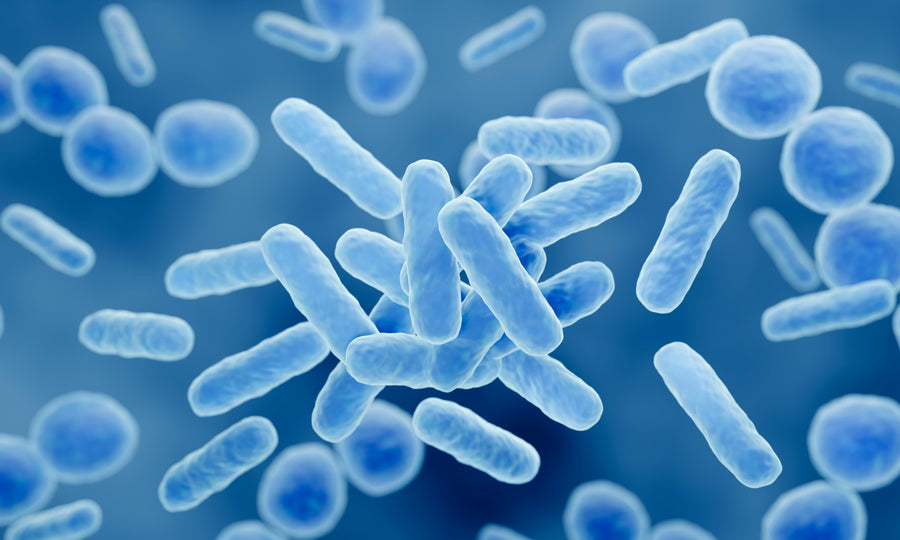
Gut bacteria can also produce histamine. The guideline names this as one reason why histamine levels in the stool say little. Researchers at the University of Barcelona compared the gut community of people with complaints caused by histamine with that of healthy people. In those affected, they found fewer bacteria considered typical of a healthy gut, such as Faecalibacterium prausnitzii, and more species that can produce histamine. In a small follow up study, some of these histamine producers decreased on a low histamine diet.
These are interesting clues, but not yet proof. The studies are small, and it is not known whether the changed gut community is a cause or a consequence of the complaints.
If you suspect it
The guideline recommends a step by step approach, ideally accompanied by a doctor and a nutrition professional:
- Get it checked: First, other causes are ruled out, for example allergies, lactose intolerance, fructose malabsorption, coeliac disease, chronic inflammatory bowel diseases and rare mast cell disorders.
- Keep a diary: You note what you eat and drink and when which complaints occur.
- Avoid briefly: for 10 to 14 days you eat a vegetable based diet and leave out foods that are particularly rich in histamine.
- Test again: in a test phase of up to six weeks, suspect foods return to your plate one after the other. This way you find out what you tolerate and in what amount.
- Eat normally again: at the end there is a varied diet that leaves out only what demonstrably does not agree with you.
Long lists of forbidden foods from the internet are of little help here. Because the histamine content of the same type of food varies so much, the guideline considers classifying foods by histamine content to be of little use. Avoiding so called histamine liberators is not scientifically proven either. These are foods that contain hardly any histamine themselves but are supposed to stimulate its release in the body. Anyone who strictly avoids foods for years, on the other hand, risks a one sided diet.
And medicines?
Some active substances are suspected of inhibiting DAO, including acetylcysteine, metamizole, verapamil, metronidazole and metoclopramide. However, the data on this are contradictory. So do not stop any medicine on your own, but talk to your doctor or pharmacy about it.
Not an intolerance: fish poisoning
Poisoning from spoiled fish, such as tuna or mackerel that was not stored cold enough, is something else. So much histamine forms that even healthy people get complaints. This is an overdose, not an intolerance. So always keep fish and meat well chilled and use them up quickly.
The bottom line: histamine is an important messenger and not an enemy. Whether it is really behind your complaints can only be found out step by step, ideally with professional support rather than a list from the internet.
This text provides general information and does not replace a medical examination or nutritional advice. As of November 2026.
Sources
- Reese I et al. (2021): Leitlinie zum Vorgehen bei Verdacht auf Unverträglichkeit gegenüber oral aufgenommenem Histamin. Guideline of DGAKI, GPA, ÄDA, SGAI and ÖGAI. Allergologie 44(10): 761. register.awmf.org (in German)
- Reese I et al. (2017): German guideline for the management of adverse reactions to ingested histamine. Allergo Journal International 26: 72. doi.org/10.1007/s40629-017-0011-5
- Maintz L, Novak N (2007): Histamine and histamine intolerance. American Journal of Clinical Nutrition 85(5): 1185. doi.org/10.1093/ajcn/85.5.1185
- Comas-Basté O et al. (2020): Histamine Intolerance: The Current State of the Art. Biomolecules 10(8): 1181. doi.org/10.3390/biom10081181
- Sánchez-Pérez S et al. (2022): Intestinal Dysbiosis in Patients with Histamine Intolerance. Nutrients 14(9): 1774. doi.org/10.3390/nu14091774
- Sánchez-Pérez S et al. (2022): The dietary treatment of histamine intolerance reduces the abundance of some histamine-secreting bacteria of the gut microbiota in histamine intolerant women. A pilot study. pmc.ncbi.nlm.nih.gov
- Austrian health portal: Histaminintoleranz. gesundheit.gv.at (in German)
- AOK: Diese Lebensmittel sollten Sie bei einer Histaminintoleranz meiden (Symptome nach Organsystemen). aok.de (in German)
Six points
If you suspect histamine
-
Get it checked first
First have other causes ruled out, such as an allergy, lactose intolerance or coeliac disease. Similar symptoms often have completely different causes.
-
Keep a diary
Note what you eat and drink and when which symptoms occur. That helps you and your doctor more than any home test.
-
Avoid briefly, then test
For 10 to 14 days, eat a diet rich in vegetables and low in histamine. After that, suspicious foods are reintroduced one at a time so you can see what you tolerate.
-
Fresh rather than long stored
Histamine forms when food ripens or spoils. Keep fish and meat well chilled, use them up quickly and freeze leftovers promptly.
-
Keep an eye on alcohol
Alcohol can hinder the breakdown of histamine. Use your diary to see whether wine, beer or sparkling wine trigger symptoms for you.
-
Do not go without for good
Strict lists of forbidden foods are hardly backed by science. Get support from a qualified nutrition professional so that you end up eating a varied diet.
Read on
Still hungry?
Three topics that go well with this one.